


living
family

Makeup Primer, Arbonne, and my Cosmetics Quest (Part 2 of 2)


This post is a continuation. To read Part 1, click here.  

As I was telling you in my post yesterday, I went to an Arbonne party. I had fun. I tried stuff. I bought stuff.

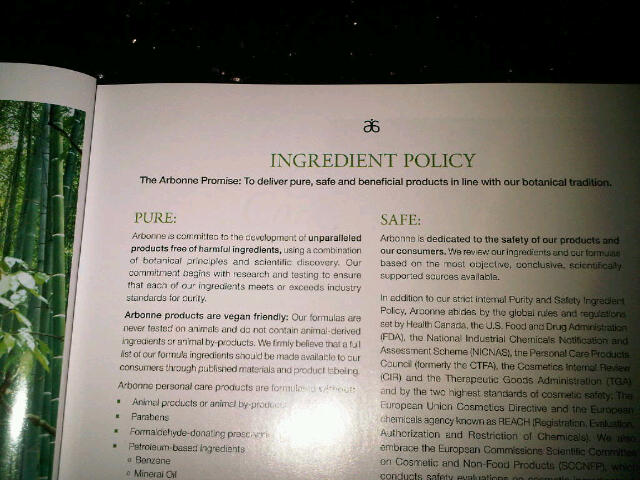
Arbonne is different from a number of other products on the shelves of my drugstore because they are formulated without:

  • Parabens
  • Formaldehyde donating preservatives
  • The following petroleum-based ingredients:
    • Benzene
    • Mineral Oil
    • Petrolatum
    • Phthalates
    • Toluene
  • PABA

However, what I didn’t do was my own research and label-reading before the party. And it turns out, this would have been a smart thing for me to have done because, although products were passed around the room for us to sample, the ingredients are not listed on the product itself — only on the exterior packaging.

But, like I mentioned yesterday, I happily (naively?) went ahead and ordered two products. These products arrived to my house only a couple of days later and I was particularly pleased with how great the makeup primer was. And then I read the label on the box and felt a tad confused. I didn’t recognize most of the ingredients, let alone know how to pronounce them.
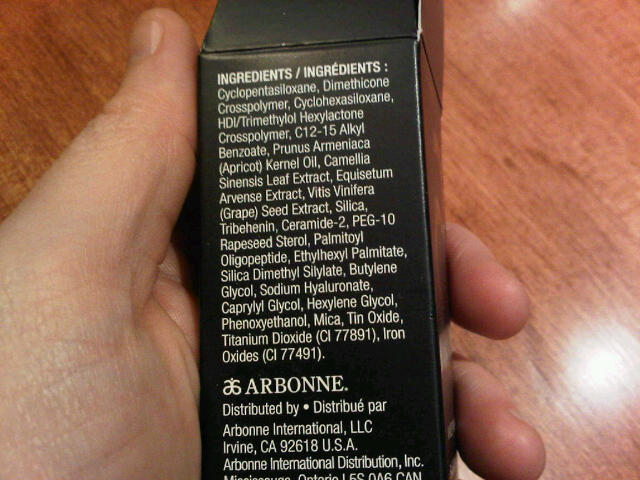
ingredients in arbonne makeup primer

So I started doing some research on the internet …

And honestly, I had a hard time. I spent hours — HOURS! — diligently seeking out these ingredients so that I could look terribly clever so that I could share the research findings with you, my dear readers. But after all that time, I could only find partial information, which you can see noted beside the items in bold below.

Ingredients (as noted on Arbonne Makeup Primer package)

  • Cyclopentasiloxane (“one or more animal studies shows tumor formation at moderate doses,” source is EWG)
  • Dimethicone Crosspolymer (I don’t know what the “crosspolymer” means here, but Dimethicone on its own is expected to be toxic or harmful for organ systems according to Environment Canada Domestic Substance List, says EWC)
  • Cyclohexasiloxane (“classified as expected to be toxic or harmful and associated with environmental toxicity. Persistent, bioaccumulative in wildlife. One or more animal studies show endocrine disruption at moderate doses. Changes in liver and fatty liver degeneration observed,” source is Colorful Canary)
  • HDI/Trimethylol Hexylactone Crosspolymer
  • C12-15 Alkyl Benzoate (suspected to be an environmental toxin, according to EWG)
  • Prunus Armeniaca (Apricot) Kernal Oil
  • Camellia Sinensis Leaf Extract
  • Equisetum Arvense Extract
  • Vitis Vinifera (Grape) Seed Extract
  • Silica
  • Tribehenin (“considered a low hazard ingredient by the Cosmetics Database, which notes that it can be a penetration enhancer and assist other chemicals in reaching lower levels of the skin,” source is Truth in Aging)
  • Ceramide-2
  • PEG-10 (Receives a moderate hazard rating on EWG’s Skin Deep database, due to contaminate risk with 1,4-Dioxane, a banned ingredient due to strong evidence of its link to cancer.)
  • Rapeseed Sterol
  • Palmitoyl Oligopeptide
  • Ethylhexyl Palmitate (strong evidence that this is a “human irritant” and considered an “uncertain environmental toxin with uncertain persistent or bioaccumulative,” source EWG)
  • Silica Dimenthyl Silyate
  • Butylene Glucol
  • Sodium Hyaluronate (“Although HA and its various formations have been used in skincare products and cosmetics for some time, there have been no published clinical studies on its topical application,” source is Truth in Aging)
  • Caprylyl Gylcol
  • Hexylene Glycol (classified as an irritant by the European Union, source EWG)
  • Phenoxyethanol (“harmful if swallowed, inhaled or absorbed through the skin and that it can cause reproductive damage. There are several animal studies that demonstrate that it is toxic – with effects on the brain and the nervous system – at moderate concentrations” – source is Be Beauty Smart)
  • Mica
  • Tin Oxide
  • Titanium Dioxide (CI 77891)
  • Iron Oxides (CI 77491)

In desperation, I reached out to Gillian Deacon, author of There’s Lead in Your Lipstick.
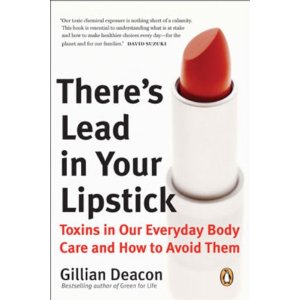
Here is my email to her:

Thanks for responding to my tweet re Arbonne! I met you a couple of weeks back at Terra20 and have been really digging my teeth into your book. 

Not long ago, I attended an Arbonne party and came home with a product called Makeup Primer. It is like heaven on a stick … really awesome and makes my face look 10 years younger (okay, not really. but it is still good.) However, I am trying to decipher the ingredient list and having a heck of time trying to find any information on many of the “chemical”-sounding ones. 

For those that I have found info on, I’ve bolded them and inserted a source in parenthesis. For the others, I’ve come up empty. If you happen to have other sources for ingredient info, I’d really appreciate a point in the right direction. 

I really appreciated Gillian taking the time to respond to me. And here is her answer to my email:
thanks for getting in touch. you are not the first reader who has asked me about arbonne, it is a popular product line. the trouble is, it is not *actually* all-natural bodycare. of course it’s excellent that the products are paraben and phthalate-free—that puts them way ahead of most drugstore brands. however, do not confuse that with completely chemical-free products.
 
while the company does use lots of promising language—”vegan”, “no animal testing”, “free of harmful ingredients”—those claims are unfortunately not backed up by the product ingredient lists. remember that the government standards which companies like arbonne claim to meet are incredibly lax and based on outdated science. (read the introductory chapter in “There’s Lead in Your Lipstick” for a refresher on greenwash and shoddy safety standards.)
 
if you look at the ingredient lists on many arbonne products, you will still see several synthetic ingredients. in short, i am not a fan. there are so many other companies out there making better products that are truly free of petrochemicals, and not just posing as green.
 
good luck on your search for safer products. I hope you enjoy the book!
arbonne ingredient policy

So there you have it my friends. Arbonne is better than most, but perhaps not as toxin-free as its marketing materials would suggest.

Have you bought any products that you were surprised or disappointed to find were not as “green” as you thought? I’m pretty bummed out about my miracle makeup primer, that’s for sure. 

Related Posts Plugin for WordPress, Blogger...
  • Pamela Tourigny

    Yup. I recently found a vial of EccoBella mascara purchased at a health food store a while back and was surprised to see it contains parabens, among other things.  EccoBella was one of the only semi-regularly available “natural” brands I could find until recently. Obviously that’s not a problem now!  :)  It is truly shocking how…terrible….most common products are, in terms of toxic ingredients.

    • Coffee with Julie

      Yes, the whole “chemical body burden” of all these products we use, and that they are not regulated carefully by government bodies, is extremely concerning. In Deacon’s book, she notes “Health Canada approves approximately 1000 chemicals and polymers each year that manufacturers and importers want to introduce [...] mak[ing] it virtually impossible to keep track of their cumulative effects and interrelations.”

  • Marianne Ferguson

    Thanks for all your due diligence, I found this post very illuminating.  I find this all so overwhelming trying to find good natural products, it almost makes me want to give up and either go a) with all the mainstream chemical products or b) completely natural and makeup free, dang how I look…. :-)   I guess, I shall press on with trying to find better options, thanks for the inspiration!

    • Coffee with Julie

      Thanks so much for your kind comments. I also find it totally overwhelming and it is way too time consuming to read labels like I did for this post. I think the only solution is to find a source that you can trust … like Terra20 or Nayla Naturals. Also, in Deacon’s book, she concludes each chapter with a “Where Can I Find This Stuff” list, which makes a handy reference. 

  • Brenda A

    Thanks for the article.  It is often tough for consumers to weed through the greening of products to get the full truth.  I think next week’s Market Place on CBC is all about this.  I plan on checking it out.  They did a similar show last year.

    • http://www.coffeewithjulie.ca Julie Harrison

      Yes, I like that Marketplace show! (even though it can make me terribly paranoid … like the expose on hotel rooms and cleanliness … bleh!)

  • http://www.coffeewithjulie.ca Julie Harrison

    Yes, the consumer is now the voice … but in some ways that is distorting the marketplace further, with the “green washing” that takes place in response to consumer demand for greener products. 

  • http://www.coffeewithjulie.ca Julie Harrison

    Well, now that’s a tough question! I’ve been using that makeup primer every day … I just can’t help it :)

  • http://www.coffeewithjulie.ca Julie Harrison

    Is there such a thing as a makeup primer in your cosmetics department because I can no longer live without makeup primer!! (See my answer above to Sarah!) 

  • Kerry Bee

    Just stumbled across this post today, so i thought i’d share how I’ve come to view Arbonne. I have used all kinds of products, from ridiculously expensive, to health food store brands, to my own homemade concoctions. At the first Arbonne party I attended, the consultant was very honest in pointing out that Arbonne does not claim to be 100% natural or 100% organic, but that they post their ingredient policy very clearly in the front of their catalog. So what they say they don’t use, they don’t… but in their ingredient list (available on their Consultant website) they very clearly state which ingredients come from plants, nuts, seeds, etc, and which ingredients come from science. Since I had already signed up as a consultant to get the discount, I spent months researching, too! My final thoughts were that this is a “middle of the road” brand…. they do use a lot of fabulous botanical ingredients, but they also use what gets us the results that we as consumers expect! I have often “switched back” to other mainstream brands or health store brands…and then immediately switched back to Arbonne again! I finally decided that it’s a compromise I am happy to make!
    I do have to say I think it’s cool that they continue to update throughout the years so that 90% of their product packaging is recyclable now. Also that they are the first direct sales company to have certified UPS carbon neutral shipments. I don’t think any company can ever be 100% perfect, but I have to say I’m very pleased with this one!

    • http://www.coffeewithjulie.ca Julie Harrison

      Hi Kerry, I am very late responding to your comment! My sincere apologies. I really appreciate it when people take the time to read and leave a comment. I think you are bang-on: this is a “middle of the road” brand — not totally toxic, but not totally non-toxic either. It’s definitely better than the other products I’ve been using to date! My makeup primer has now run out and I am very torn on what I will do next!

  • Kerry Bee

    P.S. and your right… that primer freaking ROCKS! I will never stop using it! LOL!!!

  • http://www.facebook.com/kim.crowley.564 Kim Crowley

    Be sure to ask your consultant for a complete print off of ingredients, this is available through them so you can see what is in the product and the purpose of it as well. Also check out this link for more information http://social.arbonne.com/2012/08/16/ingredients-inquiries-concerns-arbonnes-stance/ about the ingredients as well.

    • http://www.coffeewithjulie.ca Julie Harrison

      Thanks so much for that link, Kim!

  • liz

    If you’re using a good skin care line, you don’t need primer. Your skin will look great without. I am an organic skin care formulator and can see that this product is mostly petroleum. I wouldn’t put it on my face if I was paid. Also, this line is ridiculously overpriced due to their distribution method.