

Posts Tagged ‘book review’

media

Books for Tweens: The Boy in the Dress by David Walliams


I’ve been meaning to share some recommendations and reviews on books for tweens ever since I wrote about UNBORED (which will be released next week — get your copy, it’s fantastic!).

Instead of the traditional “back-to-school” clothing shopping, I took Stella, my 10-year-old daughter who has no interest in clothing, to the bookstore and let her pick a ton of books. (Hey, I was saving a fortune on clothes, so why not?!) One of these books was The Boy in the Dress, by David Walliams.

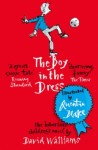
This is what the book looks like, so you can recognize it on the shelves. And Stella warns that she thought at first it was written by Ronald Dahl because it has the same illustrator (Quentin Blake).

The Boy in the Dress

I haven’t actually read the book yet myself, but in a review on the UK’s The Telegraph, you can get the general gist:

You can’t say you weren’t warned. First, there’s the title, The Boy in The Dress. Then comes the opening line of the book: “Dennis was different.” Yes, the debut children’s novel of Little Britain star David Walliams is indeed about a 12-year-old boy who loves flicking through the pages of Vogue and feeling the soft touch of silky material on his skin.

It’s the first time I’ve come across a kids’ book with a cross-dressing character, but the Guardian points out that there have been others.

The Boy in the Dress isn’t the first children’s cross-dressing title to hit the shelves, of course. There’s Terence Blacker’s underrated novel Boy 2 Girl, reviewed on these pages back in 2004, for example. But Walliams has taken a much more light-hearted approach – with a very silly twist, come the denouement. Having said that, part of the charm of this novel is that the characters really do grow, and the complicated relationships between the members of Dennis’s family are very touching.

Stella thought this book was great and highly recommends it. Some of her comments include:

  • We hear a lot of girls and stereotypes, so I like how this book discusses boys and the stereotypes that they are faced with as well. He likes to play soccer with his brother and Dad but he doesn’t like the clothes that boys are “supposed” to wear.
  • I also like that his best friend is Sikh. I’ve never read a book where there was even one character who was Sikh.
  • Although I haven’t met a boy like this one (Dennis, the main character), I think that everything was pretty realistic … the things that happen, and the reactions people have.

All in all, the book gets a big thumbs up from our household.

The Tween rating is 4 / 5  stars 

To find this book: Available in most book stores. Published by Harper Collins with FSC standards. Age guide from www.harperscollins.co.uk is 9+. I picked up our copy from a local Chapters store for $9.99.


living
media

Books for Tweens: UNBORED by Joshua Glenn & Elizabeth Foy Larsen


A major highlight for me when it comes to attending BlogWorld (now called NMX, short for New Media Expo) in New York City is that Book Expo America takes place at the same time, in the same building AND your pass for NMX also grants you access to Book Expo. Books and Blogging, all day, for three days — How can I NOT attend?!

This year, I took only one carry-on bag and it was half-full to allow space for books on the way home. So, although there were a TON of books being handed out freely, I was very selective. And yet, at least 50% of what I brought home was for tweens.

I guess I have my daughter Stella on my mind. I can clearly recall being her age (she’s going into grade 5 next year) and spending the summer gorging myself on books! It was serious heaven. So as I looked around the Book Expo floor, I couldn’t help but keep an eye out for anything that might appeal to her.

You’ll need to check out the Book Expo America site itself to really get a feel for HOW much takes place (it’s fairly mind-blowing), but if I can sum it up quickly for you, I’d say it’s a place where book publishers can introduce their new offerings to libraries, book stories, book reviewers, school boards, and international distributors. For this reason, many advance copies of books are distributed to attendees.

Source: Book Expo America Facebook Page

Of these advance copies, I chose to take home a book called UNBORED: The Essential Field Guide to Serious Fun, to be published by Bloomsbury in October 2012. To describe it would be to say it’s in the same vein as that best-selling book The Dangerous Book for Boys and its later side-kick The Great Big Glorious Book for Girls. Except without all of the vomit-inducing gender stereotyping. But even putting that vomiting stuff aside, this book is far more fun, fascinating and just plain interesting than other books I’ve seen in this kind of vein. Although publishers are supposed to rave about the book on its back cover, its description actually held true:

Vibrantly designed and illustrated, it’s crammed with activities that not only are fun and do-able, but get kids engaged in the wider world — and provides information to expand their worldviews, too, inspiring them to learn more. Right at the age when kids start to disappear into various screens, Unbored encourages them to use those tech skills in creative ways.  Activities parents will remember from their childhoods are presented alongside bold new possibilities: science experiments, crafts and upcycling, board game hacking, code-cracking, geocaching, skateboard repair, yarn bombing, stop-action moviemaking — plus tons of trivia, best-of lists, and forward-thinking ideas made accessible to kids.

Stella explained to me that one thing she particularly enjoyed about the book is how it talked about parents as needing to be “trained.” She thought that was quite chuckle-worthy. So, for example, instead of “How to teach your parents how to geocache,” it might be titled, “Train your parents to take you geocaching.”

My advanced copy is soft cover and in black and white print, but the published version coming out in October (you can pre-order on Amazon.ca now at this link, which is not an affiliate link) will be hardcover, full-colour, and with a holographic foil on the cover. The pre-order price notes $16.70 … I have no idea how it’s being offered at such a reasonable price!

Stella has had her nose in and out of this book constantly since I brought it home last month and she’s been creating board games and a variety of enviro-friendly recycling/upcycling projects and activities. Some of it I’ve appreciated more than others I’d have to admit. For instance, when I went into her washroom tonight when she was brushing her teeth I was hit by a wall of stench — urine stench! She explained that she was trying to save water by following the “if it’s yellow, let it mellow,” motto. I explained to her that she’d have much better chance of saving our environment by clearing the nuclear waste dump that her room had become. We might not see eye to eye on a few things.

If you’d like to check out the detail of the pages and some sample entries, Bloomsbury Publishing has shared some here:


Parent rating: 5 / 5 stars

Tween rating: 5 / 5 stars


media

This Audition may be a flop


I can’t say I would have normally picked this off the shelf, but a friend offered me a nice fresh hardcopy version of Barbara Walters’ memoir. Surely, I thought, it would have some tasty bits. How could it not, with such a career?

Walters initially thought of titling her book Sister, since her only sister Jacqueline “was unwittingly the strongest influence in my life.” It’s a tale that many siblings relate to, at least if the virtual shelves of Amazon.com are any indication (search “the normal one” if you’re interested in this subject).

Unlike today, where kinder labels are arguably rife, Jacqueline’s label was “mentally retarded.” I’m not yet half-way through the book yet, but so far, this element in Walters’ life is proving to be the most compelling, so perhaps she really should have called the book Sister.

Instead, she called the book Audition. It is a reference to Walters’ sense that she always had to be auditioning for social acceptance since her father’s career keep them moving from one place, and school, to another.

I feel like I want to finish this book … see if there are any fascinating tidbits shared about her famous political and celebrity interviewees. But I keep stalling. One reason is purely logistical: I only read in bed and the hard cover is heavy for my now-sore carpal tunnel-ridden hand to hold.

The other reason seems to be a bit of stubborn defiance on my part. As in, “I’m not going to read this book on principle.” And that’s because a section of the prologue keeps poking at me the wrong way. I keep wondering … Did she really write that? Did I misunderstand what she was trying to convey? Did I just not “get” it right?

So, my dear blogosphere friends, I am looking to you to give me the answer.

I don’t want to bias you, so I will just provide you with the section as it appears in the book with no following commentary from me.

Before I end this prologue, let me tell you a story. Back in the sixties, when I was appearing daily on NBC’s Today show, I was living on Seventh Avenue and Fifty-seventh Street. My apartment was across from Carnegie Hall and on the corner of a very street. It was also near several large hotels that catered to businessmen. Perhaps because of this, the corner was the gathering place for some of the most attractive “ladies of the evening.” Each morning at five o’clock I would emerge from my building wearing dark glasses, as I hadn’t yet had my makeup done, and I was usually carrying a garment bag. It seemed obvious to the “ladies” that there was some big “number” I had just left. Now, bear in mind that, even then, I wasn’t a spring chicken. But I would emerge and look at the young ladies, some of whom were still teenagers. “Good morning,” I would say. “”Good morning,” they would answer. And then I would get into this long black limosine with its uniformed driver, and we would glide off into the early morning light. And you know what effect all this had on the ladies?

I gave them hope.

Perhaps this book may do that for you.

Edited to add: As of August 31st, this entry is now cross-posted here in the Blissful Buzz section of Blissfully Domestic.


media

Wasted Beauty


Wasted beauty

Like a dog with a bone, I’ve been racing through Eric Bogosian’s three novels and raving about them on this blog. The first one I came across was his most recent, Perforated Heart, while the second one I read was Mall. Sandwiched in between these two, he wrote Wasted Beauty (2005).  

All three novels focus on American culture, and I think it’s safe to say it’s a fairly scathing perspective. Or as Hillary Frey says, “this is the stuff of ugly American living.”

Do you hear a “but” coming? Okay, here it is … But I’m not sure I like all this ugly anymore. I do like “dark.” Dark is delicious. However, I think Wasted Beauty leans more towards “bleak.”

It focuses on two people. Reba, who at the age of 20, is left parent-less, penniless and without hope for the future:

Reba digs out an icy brick from the freezer and runs hot water over the pink and yellow slab of frozen flesh, letting it soften under her thumb. Above her head the rolly-eyed Felix-the-Cat clock swishes his stiff tail, marking time, second by second. The fridge growls just as Frank’s car starts up outside. So that’s that. I will swab the green and dirty-white linoleum tiles, thaw and fry the food, sponge Billy’s [her brother] pubic hairs off the toilet, iron his work shirts. And I will stand behind a counter at the bank all day, just like Mom did. I’ll take my cigarette breaks, a half hour for lunch and all the peppermints I can eat. Maybe someday I’ll grow a few tumors of my own. (p. 6)

A stumbling series of events find her in the big city, and working as a highly successful professional model. Okay, I know you’re thinking, “that sounds like a happy ending.” No, no, I’m afraid we’re heading into very dirty territory here — heroin addiction. An addiction described so well that you can almost feel the heavenly highs, as well as the sickly lows.

Rena’s life ends up intersecting with Rick’s, a doctor going through a major mid-life angst session. He, like Rena, doesn’t hold much hope for the future:

Just get on that old conveyor belt of life, pal, enjoy those golden years and reserve your space in the assisted community (with the attached Alzheimer ward), where you will wander anonymous corridors until you lose your mind completely. Senile and incontinent you will lie in bed day after day after day, a few photos of unrecognizable grandchildren taped to the wall beside you, TV set aflicker, a world spinning on without you. (p. 132) 

I’m 156 pages into Wasted Beauty, and I know I’ll keep on reading until the very last word. I have this gnawing feeling though, one that I didn’t get from the other novels, that all this achingly talented writing (“beauty”) might bring me no where worthwhile (“wasted”).


media

MALL


As you might have guessed, I gave up on Edward. He and his little Twilight entourage did nothing for me. I felt bad just dumping him, especially when he was supposed to be so sexy and all. But, hey, c’est la vie. Us middle-aged women don’t have a whole lot of time to waste.

So, I’ve moved on to Eric. As in Eric Bogosian. If you clicked on that link, well, there’s no denying that he’s no pretty boy like Edward. But his mind is deep. And dark. (Plus, there’s always this picture, which is far better.)

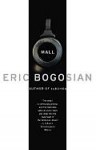
Yeah, I did mention dark, didn’t I? Okay, so you’re forewarned. I raved about his most recent book Perforated Heart here. I loved that book so much that I thought I should chase down all his books and gobble them up. He’s well-known for his monologues and plays, but his first novel was MALL, published in 2000.

Mall 
Bits from the inside dust jacket:

An outrageous novel about five suburbanites whose lives intersect in one violent and life-altering night — at the local mall. In this, his first novel, Eric Bogosian delivers a dark, hilarious and biting commentary on an American culture fraught with sex, drugs, violence and congested thinking.


Reading this novel was like watching a really well-done suspense film. You want to turn away because you just know something bad is going to happen, but you just have to keep watching to see how it all blows up in the end.

I’m no book reviewer, so I’ll leave you with a summation from John Casey to tempt you into trying out this book:

“MALL is a fast wild ride from Chapter One — big acceleration through all five gears. What makes it a lot more than an action story is the series of swift shrewd psychological sketches of characters who happen to be at the wrong mall at the wrong time. You might think Pulp Fiction and you might think Ben Jonson and you’d be right both times.”

Related Posts Plugin for WordPress, Blogger...