Archive for October, 2010

family

Happy Halloween!


Hubby and Stella have crafted up three jack-o-laterns for tomorrow night. While past years’ pumpkins have featured dinosaurs, Webkinzs and Pokemons, this year’s current favourite creature is The Angler Fish.


living
media

Douglas Coupland as a Massey Lecturer? Cool.


Past Massey lecturers have included Stephen Lewis, a crusader in the fight against HIV/AIDS in Africa; R.C. Lewontin, a pioneer in evolutionary theory, genetics and molecular biology; and Ursula Franklin, a respected feminist and research physicist.

And this year? Douglas Coupland.  

[Read more on why I just couldn't miss this ...]


living
family

I survived Brownie camp


You know how after all the participants on the Survivor television come together and reunite for the final show and you can barely recognize them because they have showered, brushed their hair and gained the weight back from the lack of food on the island? That’s how I feel right now. Except for the brushed hair. Oh, and the losing and gaining weight thing. Other than that, I look exactly like a Survivor finalist.

And that’s because this afternoon I returned from a weekend away at camp as a parent helper for Brownies (a Girl Guide program for ages 7-8). I am now showered and have a glass of wine in hand, so I am feeling much more rosy about the whole experience than I was 24 hours ago — in an unheated cabin supervising 8-year-old girls who preferred to stay up giggling than go to sleep.

Basically, being at Brownie camp is like my personal version of hell because I don’t like being cold, I need personal space, I can’t stand too much talking all at once. Oh, and there was no expresso machine, red wine or naps. So, yeah, hell.

But I believe so strongly that getting this kind of experience is so amazing for young kids that I agreed to help (I was just a helper, the leaders who organized the whole thing are my personal heros). When I was a girl, I was a Brownie and a Girl Guide and I can vividly remember going to overnight camp. And considering how many eons ago that was, it just goes to show that these kinds of camping experiences live with you forever. They’re lifetime memories.

And here are some of the memories we created this weekend:

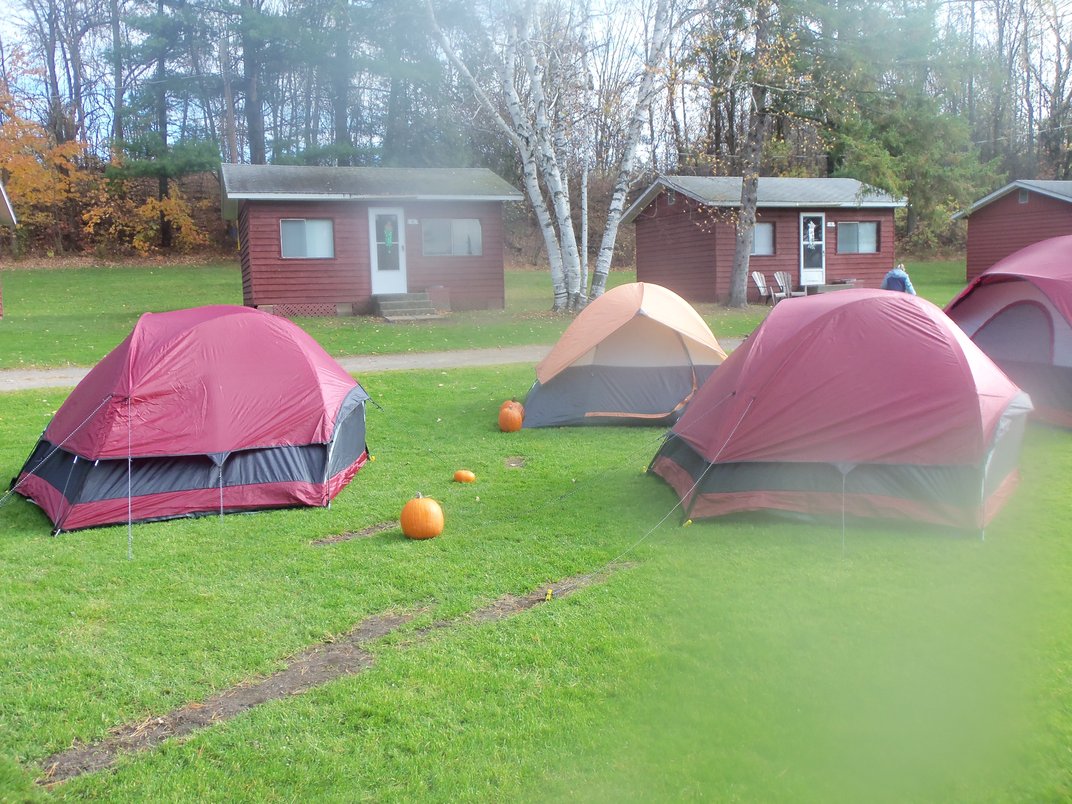
There were more than 100 girls gathered for this weekend's camp. The Sparks slept in a heating area of the dining hall, the Brownies slept in unheated cabins (shown), and the Girl Guides and Pathfinders slept in tents (shown).

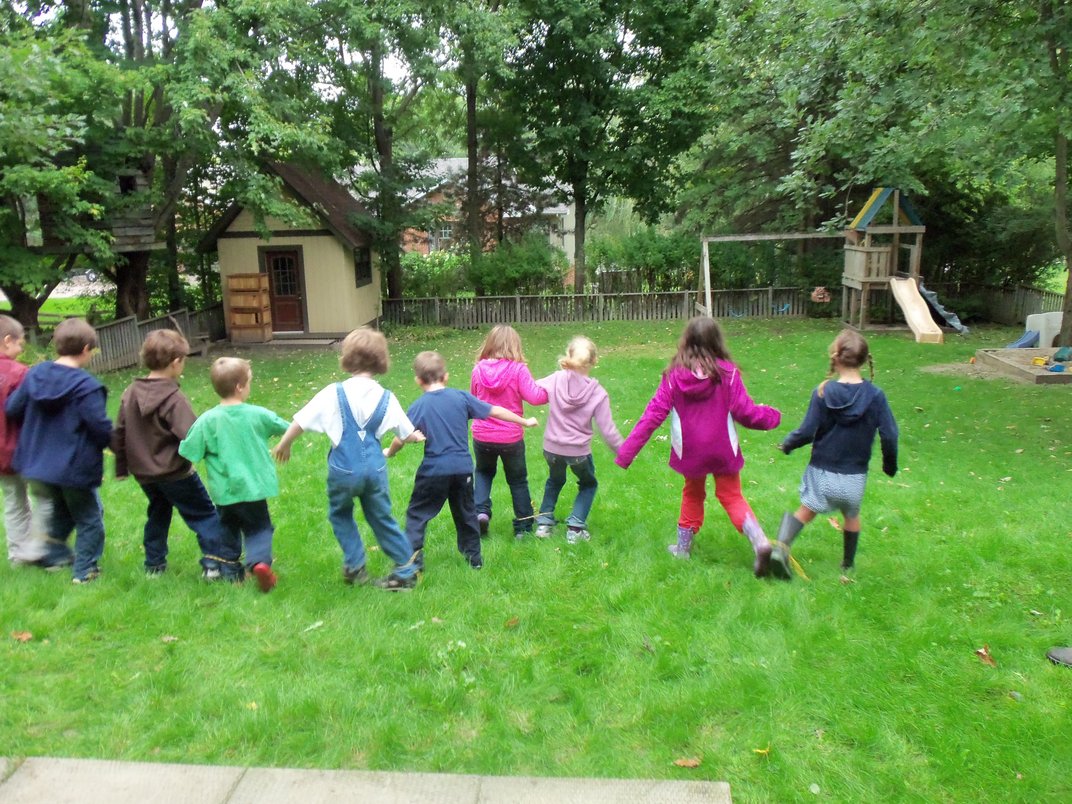
There were tons of group games. Here, the girls are playing an "elephant" race together.

And there were also tons of craft activities. Here, two Brownies are working together to make a raft from twigs and yarn.

And there some ceremony. Here, all the girls are gathered in a horseshoe formation for the flag raising and singing of the national anthem.

And there was also independence and responsibility. Here, the girls are washing their own dishes, which they then put back in their "ditty" bags (a mesh bag) to hand and dry until the next meal.

And last but not least, there was some plain old fashioned fun and silliness. Here, some girls are goofing around on their bunk beds together.

And Stella's favourite memory? The mascarade parade at sunset.


living

Today is World Osteoporosis Day: Should I Care?


I know, I know … there are so many causes with “days” that it’s hard to keep track. (And kind of makes you want to dismiss them altogether.) But I was sent some information on osteoporosis that peaked my interest and made me want to look into it a bit more. 

Before I share it with you though, let’s define osteoporosis. It’s a condition that causes bones to become thin and porous, decreasing bone strength and leading to increased risk of breaking a bone. I’m sure most of us have heard this sort of general definition before. But as I get older, and as my parents get older, the following facts seem to have hit me harder than before.

Here are some facts (source: Osteoporosis Canada):

  • 1 in 4 women and at least 1 in 8 men over 50 have osteoporosis.
  • Osteoporosis causes 70-90% of 30,000 hip fractures annually.
  • Each hip fracture costs the system $21,285 in the 1st year after hospitalization, and $44,156 if the patient is institutionalized.
  • 23% of patients who fracture a hip die in less than a year.
  • The lifetime risk of hip fracture is greater (1 in 6) than the 1 in 9 lifetime risk of developing breast cancer.

Some tips for reducing the risk (source: Health Canada):

  • Calcium: People over the age of 50 need 1200 mg of calcium each day, so make sure you’re getting enough.
  • Vitamin D: Calcium is not easily absorbed by the body without vitamin D. If you’re over the age of 50, it’s recommended that you take a daily supplement of 400 IU of vitamin D, in addition to a healthy diet.
  • Weight-bearing activity: Bones become stronger with increased activity (which is pretty amazing, really), and it’s recommended daily. Weight-bearing exercises include dancing, walking, hiking and tennis.

How do you know if you have osteoporosis?

Osteoporosis largely goes undiagnosed until it’s too late. Your bones can be losing density without you knowing it and that’s why the condition is sometimes called “the silent thief.” A confirmed diagnosis is possible through a test called Bone Mineral Density test — a safe, painless test apparently.

What can you do if you have osteoporosis?

Unlike when my Nana fell, broke her hip, had to live in care, and died shortly afterwards, there are a number of treatments available today. I’m no expert on them, of course. But if you have any of the risk facts listed here, it’s good to know that you’ve got some options.

So … all this to say that someone emailed me asking if I would help raise awareness for osteoporosis. I really didn’t think I cared about osteoporosis, but maybe I should.

For more information, here are some websites: Health Canada (government), Osteoporosis Canada(non-profit, with government and Caltrate — a calcium supplement – as sponsors), International Osteoporosis Foundation (non-profit, non-government), and the organization that had contacted me in the first place and got me thinking about osteoporosis is On the Go Women (run by a Canadian pharmaceutical company called Novartis).


living
media

Suicide prevention and the “It gets better” campaign


*** Important: If you are thinking about suicide or experiencing a crisis right now, don’t wait: Call 9-1-1 or go to your nearest hospital emergency room. There are professionals available who can give you immediate help. ***

I’ve been deeply moved by the recent movement “It gets better.”

In response to some recent high-profile teen suicides, Dan Savage, a well-known writer and openly gay man, sparked a tremendous viral video campaign in the hopes of preventing gay and lesbian teens from choosing suicide. Understanding the deep despair that can come from isolation, taunting and outright homophobia, Savage reaches out to tell teens that “it gets better” — life after high school can be good, fulfilling, and very happy.

Savage and his partner’s “It gets better” video has inspired countless others to do the same. Now, any teen facing turmoil related to sexual identity can see and hear the stories of hundred of others who’ve been there. It is a clear societal plea to wait – don’t end your life — it gets better. You will find the life you deserve.

Naturally, the videos are not a fix to the larger issue of discrimination against gay, lesbian, bisexual and transgendered teens and adults. But they are speaking out loud about something our society rarely speaks of: suicide. 

Suicide: can we talk about it?

It’s not that I blame people for not talking openly about suicide. I understand it’s hard. Right now, I am fumbling for words, hoping that I am not saying something “wrong.”

But surely, if we as a society have successfully learned to talk about safe sex and HIV, we can learn to talk about mental health and suicide. An article in the Ottawa Citizen, although dated now (2002), makes this point clear with numbers: “For over 23 years widespread media and professional attention concentrated on 12,500 AIDS deaths, compared to little concern with 92,000 suicides.”

Like most other hard topics — serious illness in children, the death of a child, miscarriage, addiction, mental illness – the silence can often be one of the most difficult parts for the person and their loved ones. Those three simple words — it gets better — may not seem like much. But they can be start. They can provide a tiny glimpse that there could be light at the end of a very deep and suffocating tunnel.

If you’ve never been to that pit of darkness that a major depressive episode can take you to, then the notion of taking your life might seem utterly unthinkable. So unthinkable that, as a society, we’ve stigmatized those affected by suicide ideation and those who’ve loved someone who has committed suicide.

Let’s try and talk more about it. Not about the act of suicide, but about suicide prevention.

Suicide takes a heavy toll

Recent media attention has focused on the suicide of teens that were bullyied in relation to gender identity, but the cold hard fact is this, according to the Canadian Mental Health Association (emphasis mine):

In Canada, suicide is the second highest cause of death for youth aged 10-24.

The impact of suicide on a family is incredibly deep and can affect many generations. The statistics tell us that males commit suicide at far greater rates than females, which might explain why slurrs around suicide often debase it as an “unmanly” act — “selfish,” or “weak.”

These words certainly won’t prevent someone in despair from taking their own life. We need much better words to talk about suicide in an open and frank manner because it’s enacting a heavy toll on our society. Just consider:

“Men commit suicide at a rate four times higher than that of women. According to a report by the Canadian Institute for Health Information (CIHI), more men in Ontario committed suicide in the past 10 years than died in car crashes.” source

And, according to the World Health Organization (WHO), while you have been reading this post, someone in the world has committed suicide. Because every 40 seconds, another life is lost.

Sadly, I think the person I’ve known to talk about suicide most frankly was the woman who shared my hospital room in a maternity ward. A few hours after I had delivered my son, she had delivered a daughter. While my son looked like a huge, bouncing baby, her daughter — at almost half his size – looked tiny and vulnerable. And so did she. Her partner, the baby’s father, had committed suicide while she was in her first trimester.

But what can we do?

This is a tough one …. but I think that talking more openly about suicide and its connection to mental health is a good start. Perhaps it could help deflate the stigma that someone in our family, workplace or school may be feeling.

While countless families and loved ones did not have the advantage of being shown warning signs, we can try to keep ourselves open to the following warning signs, as identified by the Canadian Mental Health Association, in case someone we know shares them with us:

Some warning signs that a person may be suicidal include:

  • repeated expressions of hopelessness, helplessness, or desperation,
  • behaviour that is out of character, such as recklessness in someone who is normally careful,
  • signs of depression – sleeplessness, social withdrawal, loss of appetite, loss of interest in usual activities,
  • a sudden and unexpected change to a cheerful attitude,
  • giving away prized possessions to friends and family,
  • making a will, taking out insurance, or other preparations for death, such as telling final wishes to someone close,
  • making remarks related to death and dying, or an expressed intent to commit suicide. An expressed intent to commit suicide should always be taken very seriously.

It gets better

While the campaign’s message that “It gets better,” is no doubt true to the core, one doesn’t need to wait alone until it does. I think it’s awful to imagine a young person suffering in silence throughout four years of high school (for an adult, four years may seem like no big deal, but for a young person, it might be an eternity).

I’m not advocating that people need to shout from the rooftops about their own personal despair. Everyone still has a right to their own boundaries, whether they be broad or narrow. But we can encourage one another to talk to someone of trust. And if a person feels unable to speak to someone he or she knows, let’s ensure that information is readily available for crisis and support services — as readily available as condoms now are.

Sure, it gets better. But maybe we can help it get better sooner than later.

For more resources and information on suicide: Canadian Children’s Rights Council, The Canadian Mental Health Association, Crisis Support Services in Ontario, and in the United States Mental Health America, National Institute of Mental Health (USA), and for my Australian readers SANE Australia.

  • What do you think … is there anything we can do to help lower the rates of suicide in our own country? Our own city or town? Perhaps even our own school or workplace?
  • How has the “It gets better” campaign affected you?
  • The term “bullying” is used a lot these days. Do you think that we bully more as a society now than we did before? Is there a difference between teasing and bullying?
Related Posts Plugin for WordPress, Blogger...